Water Management for
Car Washes & Service Stations.
Car washes are among the most water-intensive commercial operations per square foot — and among the most technically advanced in water reclaim. WST audits reclaim systems for actual recovery efficiency, identifies billing misclassifications specific to the sector, and monitors for the continuous-flow faults that car wash equipment is prone to.
The Challenge
Car wash water management is more complex
than the reclaim system alone.
Most car wash operators focus water management on the reclaim system. WST's audit covers the full water cost profile — including the billing classifications and equipment faults that the reclaim system doesn't address.
Car wash reclaim system manufacturers publish recovery rates of 65–85%. Field performance frequently falls well below this range due to sediment build-up in holding tanks, chemical imbalance in recycled water, pump efficiency degradation, and overflow bypass events. WST's reclaim audit measures actual recovery rate against claimed specifications — and in most cases identifies 15–30% underperformance that translates directly into excess water consumption and discharge costs.
Car wash reclaim systems require fresh water top-up to maintain wash quality — but the volume of fresh water required depends on the quality of the recycled water. Systems with sub-optimal chemical management or inadequate solids removal require more fresh water dilution to maintain quality, increasing both fresh water consumption and discharge volume. Reclaim water quality optimisation reduces the fresh-to-reclaim ratio — saving both water and chemistry costs.
Car wash discharge contains elevated TSS, petroleum residues, and surfactants — characteristics that in many municipalities qualify the operation for classification under a specialised car wash or vehicle service discharge category rather than general commercial. In some jurisdictions this is a higher rate (creating reclassification downward opportunity); in others it triggers specific pretreatment requirements that the property may already be meeting — creating evidence for rate dispute.
WST Approach
How WST approaches
car wash and service station operations.
Typical Outcomes
| Metric | Outcome |
|---|---|
| Reclaim recovery improvement | 10–25 percentage points |
| Fresh water consumption reduction | 15–30% |
| Discharge reclassification saving | $5–15K/yr |
| Annual location saving | $20–60K |
| Reclaim audit turnaround | 3–5 days on-site |
| Upfront cost | Zero — shared savings |
Verified Results
Case studies from
Service Stations & Car Washes
Register free to access the full reports. Every outcome is verified — no projections.
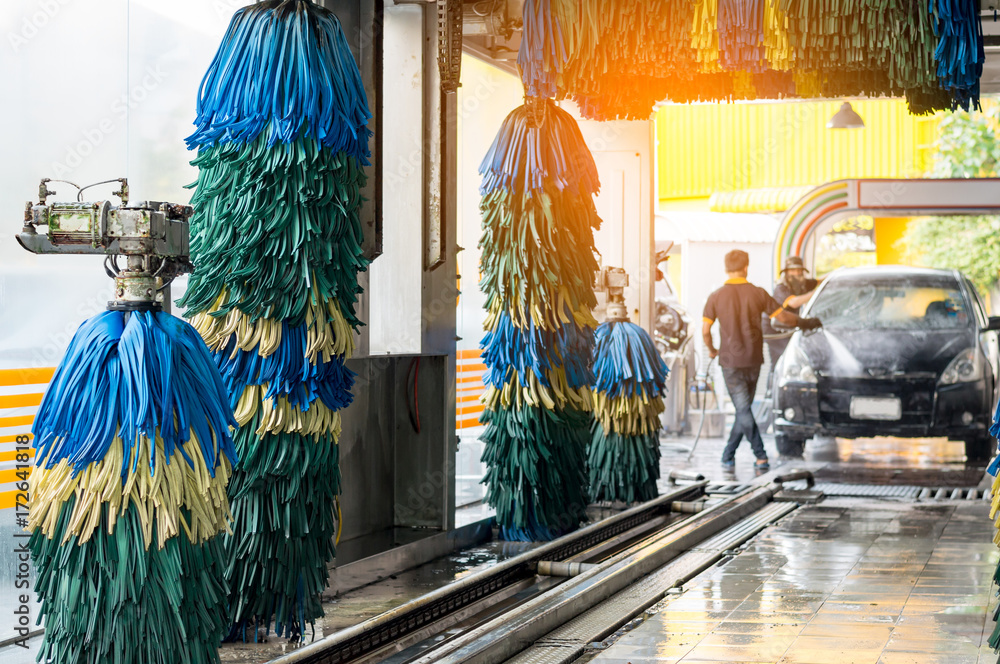
Closed-Loop Rinse Water Recycling System Installation
Mister Car Wash engaged WST to design and install a closed-loop rinse water recycling system. The system reclaims 70% of rinse water per wash cycle through a multi-stage filtration and recirculation process.
High-Pressure Pump Tuning & Energy-Water Audit
Zips Car Wash engaged WST to audit and tune high-pressure pump systems across 15 express wash locations. Pump pressure calibration eliminated over-spray waste and reduced energy consumption by 20% per location.
Restroom & Landscaping Water Audit — Forecourt Facilities
Shell engaged WST to conduct a full restroom and landscaping water audit across a high-traffic Houston forecourt. Smart irrigation scheduling reduced landscaping water use by 45%, and restroom sensor upgrades cut fixture consumption by 30%.
Related Services
WST services most relevant
to Service Stations & Car Washes.
irrigation water budget?
A WST Service Stations & Car Washes assessment maps your current irrigation schedule against ET requirements, identifies the savings opportunity, and scopes the programme — delivered within 5 business days from billing records.